Nothing else looks like marble. Nothing else feels like marble. If you want the ultimate luxury surface, this is it. Supplied and fitted by our own team across London, the Home Counties and the wider South East. We’ve been fitting kitchen worktops in stone for 16 years from our base in Thame, Oxfordshire.
Free home consultation. Honest written quote within 24 hours.
☎️ Office 01844 698 821
📱 Paula 07492 363 932
📱 Zyggi 07976 596 277
The case for marble
Marble is limestone that’s been transformed by heat and pressure deep within the earth. That process creates the flowing veins and translucent quality people have prized for thousands of years. Michelangelo carved David from Carrara marble. The Taj Mahal is clad in it. The finest patisseries in Paris still use marble slabs for rolling pastry, because nothing else stays as cool.
In a kitchen, marble makes a statement no other material can match. There’s a depth and warmth to it that photographs never quite capture. You have to stand in front of a bookmatched Calacatta island to really understand what the fuss is about. It’s arresting.
We’ll be straight with you. Marble is not the most practical kitchen worktop. It needs more care than quartz or granite. But for plenty of our clients, the beauty is worth the extra attention. With the right expectations and a good sealing routine, marble performs perfectly well in a real working kitchen.
Popular marble types we fit
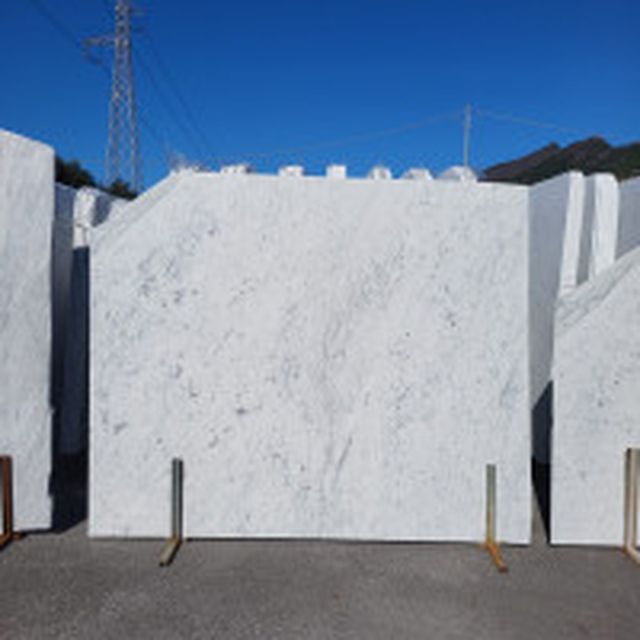
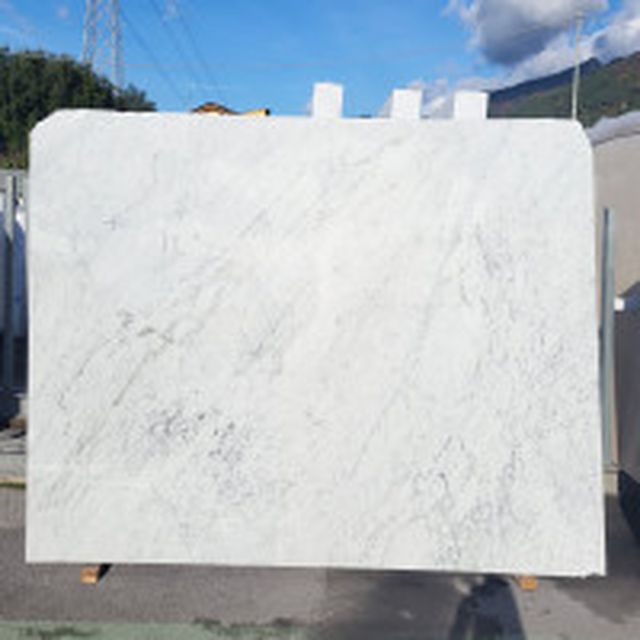
Bianco Carrara
The classic. White-grey background with soft grey veining. Quarried in Tuscany, it’s been the world’s favourite marble for centuries. It’s also the most accessible price-wise, which makes it a brilliant entry point into marble worktops. We fit more Carrara than any other marble. It suits virtually every kitchen style. Available polished or honed — the honed (matt) finish is our usual recommendation for kitchens, because it wears etching far more gracefully.
Calacatta Gold
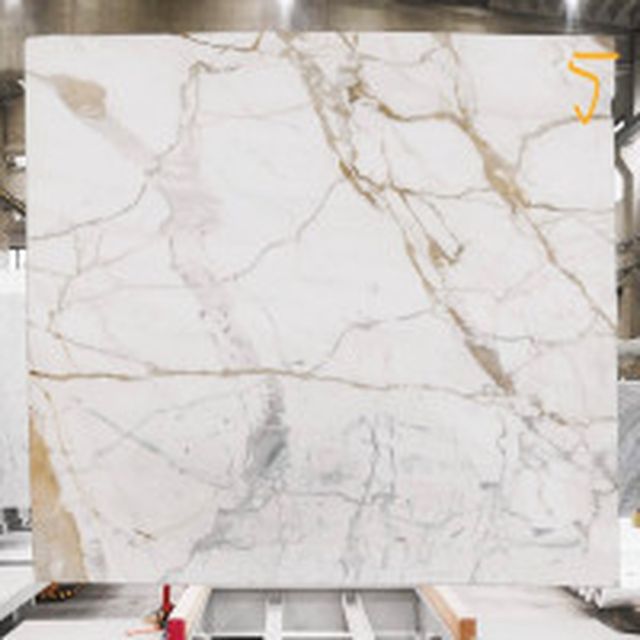
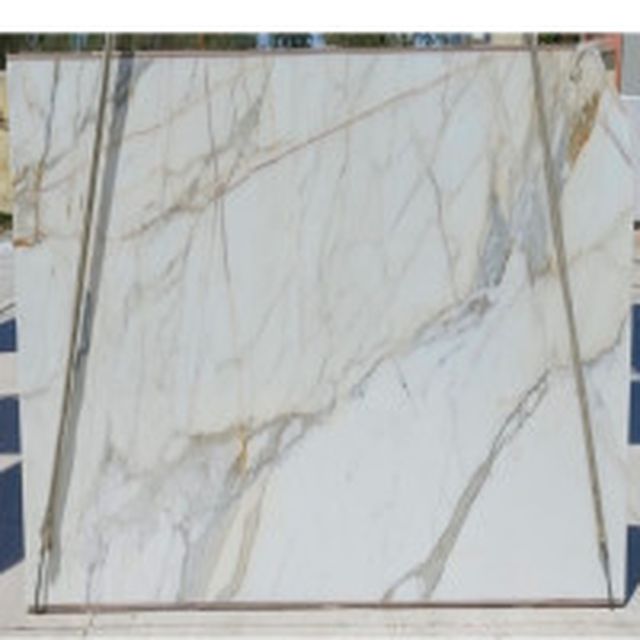
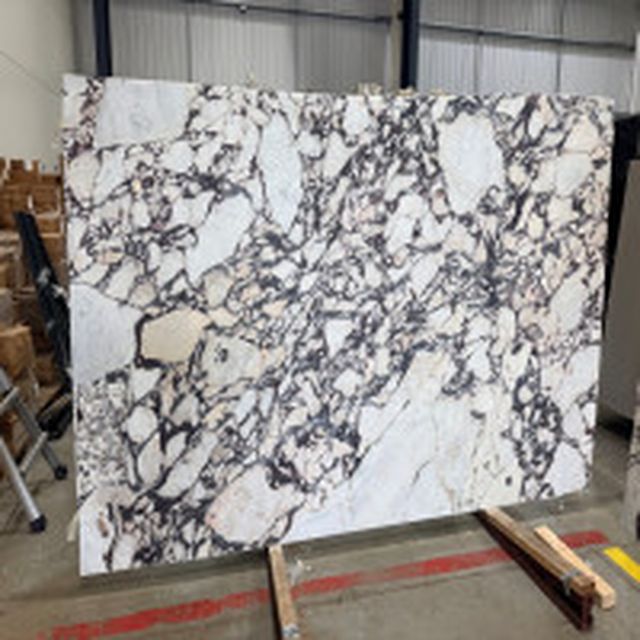
Rarer and more dramatic than Carrara. Bright white background with bold, golden-toned veins. Calacatta comes from the same region of Italy but from far fewer quarries, which pushes the price up. It’s a showstopper. A Calacatta island is the kind of thing guests can’t stop touching.
Statuario
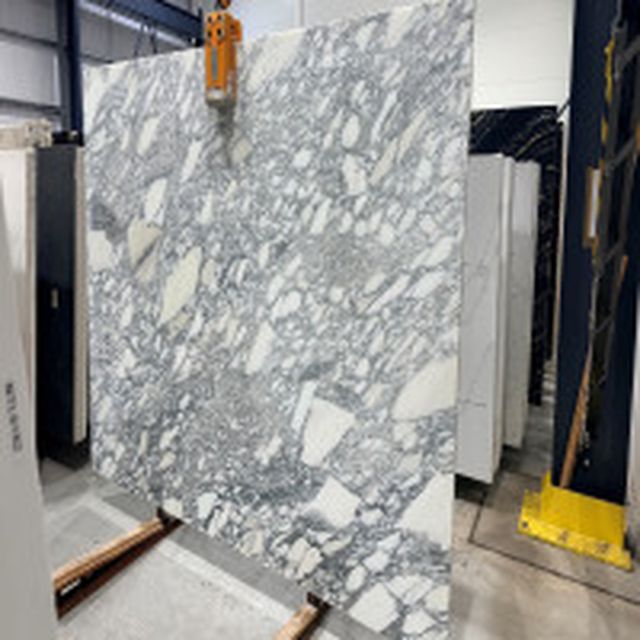
The marble that sculptors fight over. Brilliant white with striking grey veins, bolder than Carrara, more refined than Calacatta. Supply is limited and prices reflect that. If budget allows, Statuario is arguably the finest white marble available.
Nero Marquina
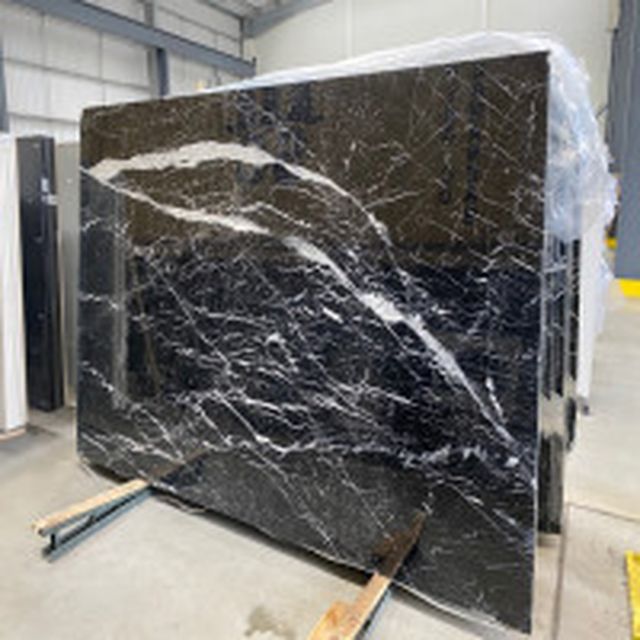
Spanish black marble with crisp white veining. Completely different mood. Dramatic, contemporary, sophisticated. Works beautifully in darker kitchen schemes or as a contrast piece against white cabinetry.
These are our most-requested marbles. We work with stone from quarries across Italy, Spain, Greece, Turkey and beyond. If you’ve seen a particular marble you love, tell us the name and we’ll usually be able to track it down.
Warm and coloured marbles
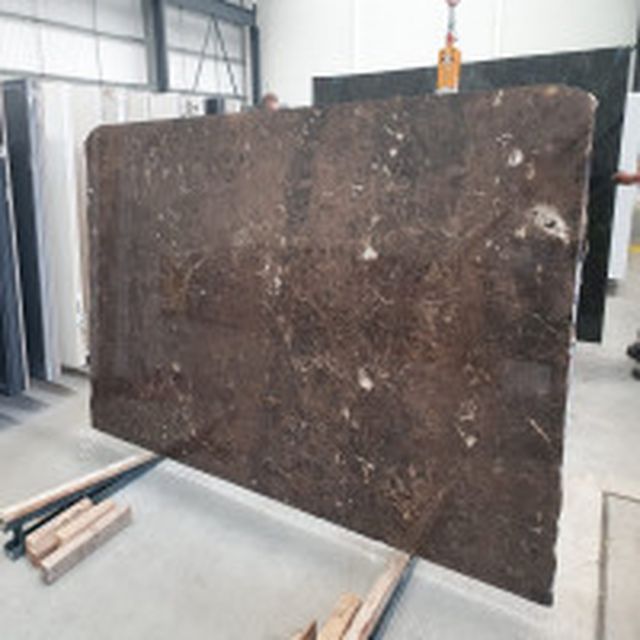
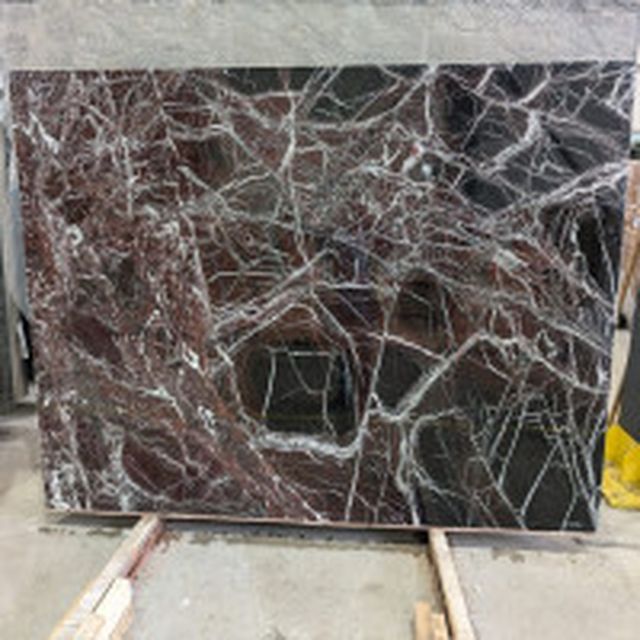
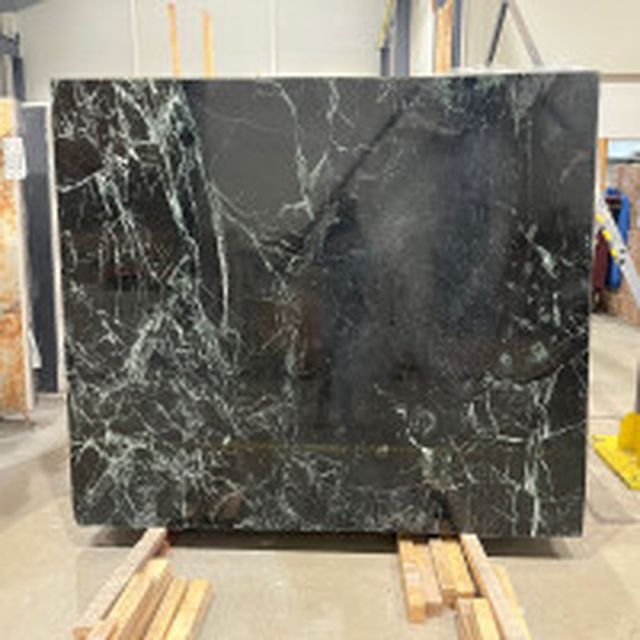
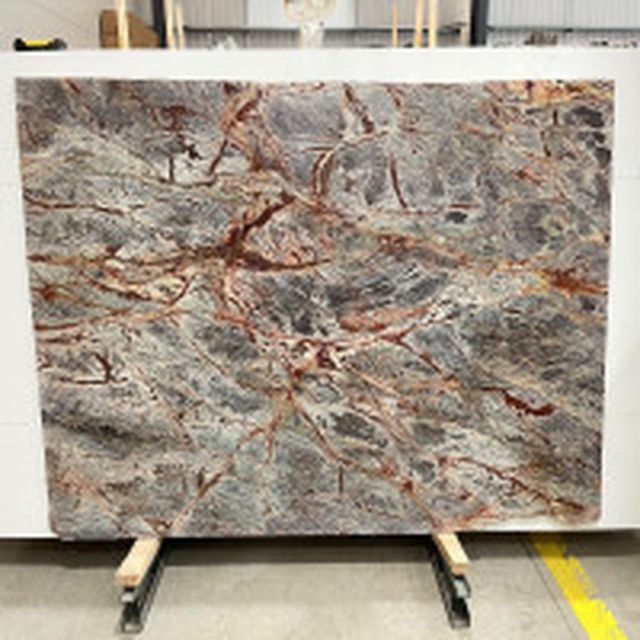
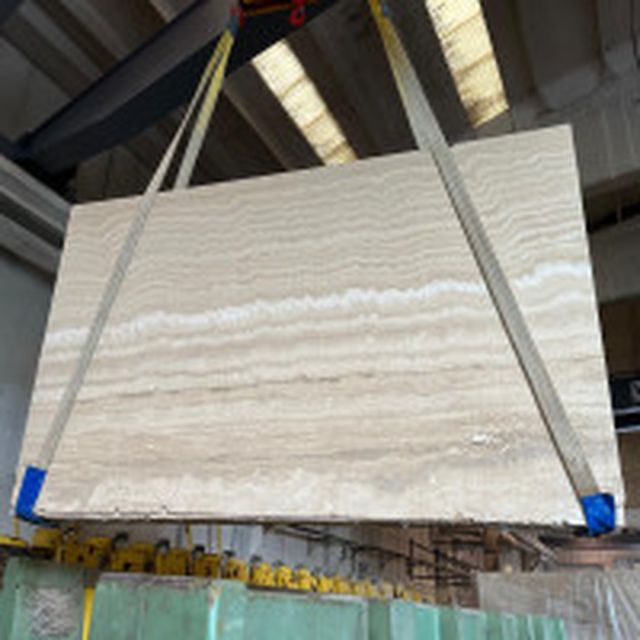
White marble takes the headlines, but some of the most characterful kitchens we fit use colour. Crema Marfil (Spain) is a soft, warm cream that flatters traditional kitchens. Rosso Levanto brings deep wine red, Verde Alpi a rich alpine green, and Rainforest Brown looks like a satellite photo of a river delta. These work beautifully as islands, vanity tops and fireplace surrounds where you want the stone to be the point.
Let’s talk about maintenance — honestly
We’d be doing you a disservice if we glossed over this. Marble is a softer, more porous stone than granite or quartz. That means:
It can stain. Red wine, coffee, beetroot — if left sitting on unsealed marble, they’ll leave a mark. With proper sealing the risk drops a lot, but marble will never be as stain-proof as quartz.
It etches. Acidic substances (lemon juice, vinegar, tomato sauce) react with the calcium carbonate in marble and leave dull spots called etching. It’s not structural damage, and it can be polished out, but it happens.
It’s softer. Marble scores 3-4 on the Mohs scale versus granite’s 6-7. It can scratch and chip more easily. Use chopping boards, always.
It needs sealing. We seal every marble worktop before we leave your kitchen. After that, you’ll want to re-seal every six to twelve months to keep the protection up.
Sounds like a lot of negatives? Here’s the other side. Marble develops what’s called a patina over time — a gentle softening of the surface that many people find more beautiful than the factory polish. A lived-in marble worktop has character. It tells the story of your kitchen. Some of the finest marble worktops we’ve seen are ones that have been used properly for ten or fifteen years.
If you want a surface you can abuse without thinking, choose quartz. If you want something with soul and you’re happy to treat it with a bit of respect, marble rewards you like nothing else.
Where marble works brilliantly
- Kitchen worktops and islands. The obvious one. A marble island as the centrepiece of an open-plan kitchen is hard to beat.
- Bathroom vanity tops. Marble and bathrooms are a natural pairing. The material handles humidity well, and a Carrara vanity top with an undermount basin looks properly elegant.
- Fireplace surrounds. Marble has been used around fireplaces for hundreds of years. It’s heat-resistant and the natural veining draws the eye.
- Feature walls and splashbacks. A full-height marble splashback behind the hob creates a focal point no tile can match. We can bookmatch two slabs so the veining mirrors perfectly. The effect is extraordinary.
Marble vs granite vs quartz — at a glance
| Marble | Granite | Quartz | |
|---|---|---|---|
| Heat resistance | Excellent | Excellent | Moderate (resin can scorch) |
| Scratch resistance | Poor (Mohs 3-4) | Excellent (Mohs 6-7) | Excellent (Mohs 7) |
| Stain resistance | Poor (sealed: better) | Good (with sealing) | Excellent (non-porous) |
| Etching from acids | Yes | No | No |
| Maintenance | Frequent care, 6-12mo reseal | Yearly reseal | Wipe down only |
| Each slab unique | Yes | Yes | No (consistent) |
| Outdoor use | No | Yes | No |
| Visual character | Soft, veined, luxury | Natural, characterful | Engineered, uniform |
For a fuller comparison: Granite vs Quartz Worktops.
Pros and cons of marble worktops
The case for marble:
- Visually unmatched. No other surface has the same depth, veining and presence.
- Develops a desirable patina over years of real use.
- Heat-resistant — pastry chefs use marble for a reason.
- Bookmatching slabs creates dramatic feature walls and islands.
- Often less expensive than headline-brand marble-look quartzes (especially Bianco Carrara).
The case against marble:
- Will etch from acidic foods and drinks. Lemon juice on bare marble = a dull mark.
- Will scratch more easily than granite or quartz. Chopping boards are non-negotiable.
- Needs sealing every six to twelve months.
- Stains if spills aren’t caught quickly.
If your priority is “no babying ever”, marble isn’t the right choice. If your priority is “the most beautiful surface money can buy and I’ll treat it well”, nothing else compares.
How we fit marble
Marble demands careful handling, and we treat every slab with the respect it deserves.
1. Consultation. We discuss your vision, recommend marble types that suit your usage and budget, and arrange a home visit with samples.
2. Slab selection. With marble, we strongly recommend visiting the stockyard to choose your exact slabs. Veining varies enormously from piece to piece, and you want to love the stone that ends up in your kitchen.
3. Templating. Precision laser templating in your home, recording every dimension to the millimetre.
4. Fabrication. Cut, edged and polished — or honed, if you prefer a matte finish.
5. Installation. Fitted, sealed and finished by our own team. We take particular care with marble joints. A well-fitted marble worktop should look like a single continuous surface.
What actually drives the cost of a marble kitchen
We don’t quote in advance because no two kitchens are the same and a price online would be misleading. What we can tell you is what shifts the number.
- The marble itself. Bianco Carrara is the most accessible price point in marble. Calacatta Gold and Statuario sit higher, reflecting limited quarry supply.
- Total run length. A galley kitchen with one continuous worktop costs less than a split L-shape with an island, simply because cutting more separate pieces adds labour.
- Cutouts and bookmatching. Bookmatched feature walls take more time to template, cut and align. Worth it for the visual.
- Edge profile. Square or pencil-round are standard. Mitred and ogee profiles cost more.
- Access. A first-floor flat with narrow stairs costs more than a ground-floor delivery, because lifting heavy slabs safely takes more people and more time.
Free home consultation, written itemised quote, no hidden charges.
Common questions about marble worktops
Is marble suitable for a busy kitchen? Yes, with the right expectations. You’ll need to use chopping boards, wipe up acidic spills quickly, and seal every six to twelve months. If that sounds like too much, quartz or granite is a better fit. If it sounds like normal kitchen care, marble works fine.
What’s the difference between Carrara and Calacatta? Both come from the same region of Italy. Carrara has soft, grey, more uniform veining and a slightly grey-toned background. Calacatta has bolder, more dramatic veins (often with golden tones) on a brighter white background. Carrara is more accessible price-wise; Calacatta is rarer and pricier.
Will my marble etch? If acidic substances (lemon, vinegar, tomato, wine) sit on bare marble, yes — they’ll leave a dull mark called etching. It’s a chemical reaction with the stone, not damage. With prompt wipe-up and proper sealing, the risk drops a lot. Etching can also be polished out by a stone restoration specialist.
Do I need to seal marble? Yes. We seal every marble worktop before we leave your kitchen, and you’ll want to re-seal every six to twelve months. The seal isn’t permanent — it wears off with normal cleaning.
How thick is marble worktop? 20 mm or 30 mm are the common kitchen thicknesses. Mitred edges create a thicker visual without buying a thicker slab.
Can I have a polished or honed finish? Both. Polished is the classic high-shine finish. Honed is a matte, smoother finish that hides etching and scratches better — increasingly popular in busy family kitchens.
Can you bookmatch marble? Yes, where the slabs allow. Bookmatching means cutting two adjacent slabs so they mirror each other along the join. Spectacular for islands and full-height splashbacks.
Can marble go on a fireplace? Yes. Marble has been used around fireplaces for centuries. It handles heat well and the veining is a feature.
Is marble cheaper than quartz? Sometimes. Bianco Carrara can be less expensive than headline-brand marble-look quartzes from Silestone or Caesarstone. Premium marbles (Calacatta, Statuario) cost more.
Do you fit marble in London? Yes. We’re based in Thame, Oxfordshire and cover central and outer London regularly. See Marble Worktops London.
Why choose IP Stone for marble
Marble is less forgiving than quartz or granite. Joints need to be tighter, handling more careful, and the finishing spot-on because every mark shows. This is where experience counts.
We’ve been fitting marble worktops across London and the South East for 16 years, and our fitters know the stone inside out — how it behaves, where it’s vulnerable, and how to bring out the best in every slab.
Based in Thame, Oxfordshire, we’re a small team that does things properly. No rushed jobs, no subcontractors, no corners cut.
Get in touch
Send us photos of your kitchen and rough dimensions. We’ll come back with an honest quote, usually within 24 hours. Straight advice, no sales pitch.
[Contact form to be inserted here by owner]
Paula (office): 01844 698 821 Direct mobile: 07492 363 932 Email: info@ipstone.co.uk
Marble worktops near you
We supply and fit marble across London, the Home Counties and the wider South East. Some of the towns we cover most often (linking to existing area pages):
- Marble Worktops London
- Marble Worktops Oxford
- Marble Worktops Reading
- Marble Worktops Watford
- Marble Worktops Milton Keynes
- Marble Worktops St Albans
- Marble Worktops Henley-on-Thames
- Marble Worktops Beaconsfield
- Marble Worktops Windsor
- Marble Worktops Richmond
- Marble Worktops Leicester
- Marble Worktops Norwich
- Marble Worktops Cambridge
- Marble Worktops Birmingham
- Marble Worktops Southampton
Related guides
- Granite vs Quartz — which should you choose?
- Quartz Worktops
- Granite Worktops
- Kitchen Worktop Replacement
- Quartz Overlay Worktops