If you’re fitting a new kitchen or replacing tired worktops, chances are you’ve narrowed it down to two options: granite or quartz. Both are stunning. Both are hard-wearing. Both add real value to your home. But they aren’t the same stone, and the right choice depends on how you actually use your kitchen.
Free home consultation. Honest written quote within 24 hours.
☎️ Office 01844 698 821
📱 Paula 07492 363 932
📱 Zyggi 07976 596 277
We’ve been cutting and fitting both materials for 16 years from our base in Thame, Oxfordshire. Here’s what we tell our clients when they ask which one to go for.
What’s the difference?
Granite is a natural stone. Quarried from the earth in massive slabs, then cut and polished to fit your kitchen. Every piece is genuinely one of a kind. The patterns, flecks and veining you see in granite formed underground over millions of years, and no two slabs will ever look quite the same.
Quartz worktops (sometimes called engineered stone) are manufactured. About 93% ground natural quartz is mixed with resins and pigments, then pressed into slabs. The result looks and feels like natural stone, but with more consistency in colour and pattern.
That single difference — natural single-block stone versus engineered consistent slab — drives most of the practical differences below.
Durability
Both materials are tough. You won’t damage either one with normal kitchen use.
Granite scores 6-7 on the Mohs hardness scale. It’ll shrug off knife marks and everyday wear without flinching. Quartz scores around 7. The resin binder in quartz makes it slightly more flexible and less prone to chipping at the edges, which can matter on long thin overhangs.
Where granite has the clear edge is heat resistance. You can put a hot pan straight from the hob onto granite and it won’t bat an eyelid. Quartz can handle warmth, but prolonged contact with cookware above about 150 °C can potentially discolour the resin. We always recommend trivets with quartz, just to be safe.
Maintenance
This is where quartz really shines. Because it’s non-porous, quartz won’t absorb spills, stains or bacteria. A wipe with warm soapy water is all it needs. No sealing. No special products. No fuss.
Granite is slightly porous. It should be sealed when fitted (we do this as standard before we leave your kitchen) and re-sealed every year or two. It’s not a big job — about fifteen minutes — but it is an extra step. If you leave red wine or lemon juice sitting on unsealed granite, it can leave a mark.
If “minimum thinking required” is your priority, quartz wins. If a yearly fifteen-minute job doesn’t bother you, granite is just as practical.
Looks
This one comes down to personal taste, but there’s an important distinction.
Granite offers natural, unrepeatable beauty. Dramatic veining, crystal flecks that catch the light, depth and character that no factory can replicate. If you want your kitchen to feel truly unique, granite delivers that.
Quartz gives you more control. Because it’s manufactured, you can get very precise, consistent colours — brilliant whites, deep blacks, convincing marble-look patterns. If you’re matching to specific cabinet colours or want a clean uniform surface, quartz makes it easier.
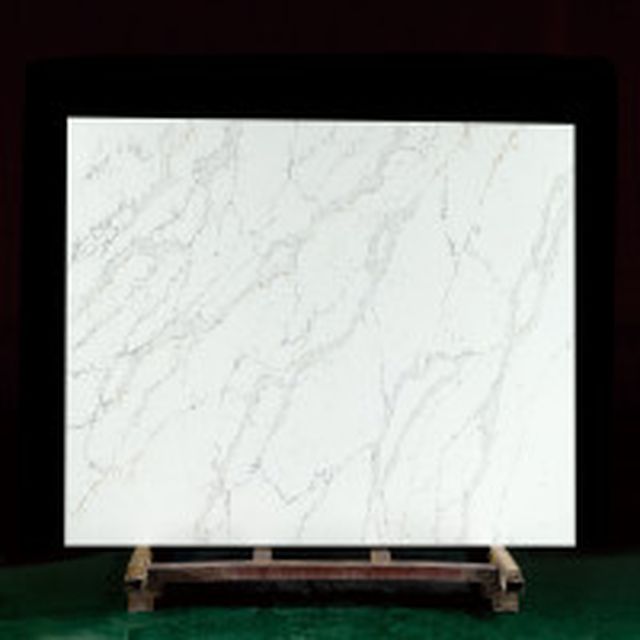
Marble-look quartz, in particular, has changed the game. You can get the visual of Calacatta or Carrara marble without any of marble’s maintenance headaches. It’s the most-fitted style we work with.
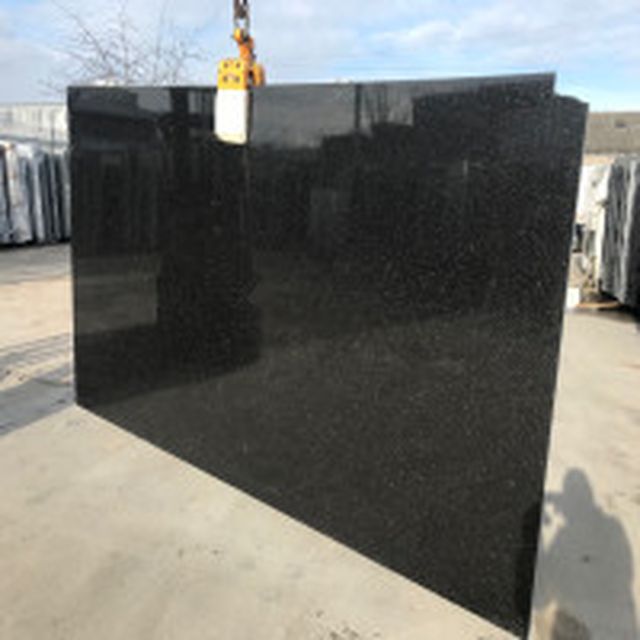
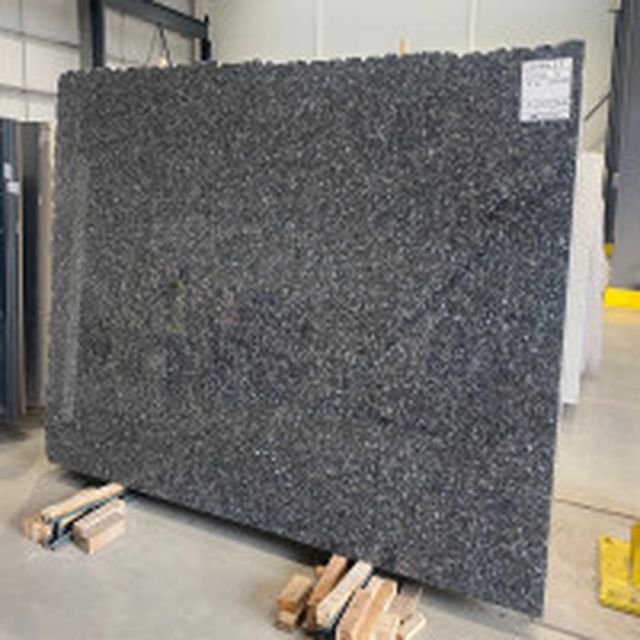
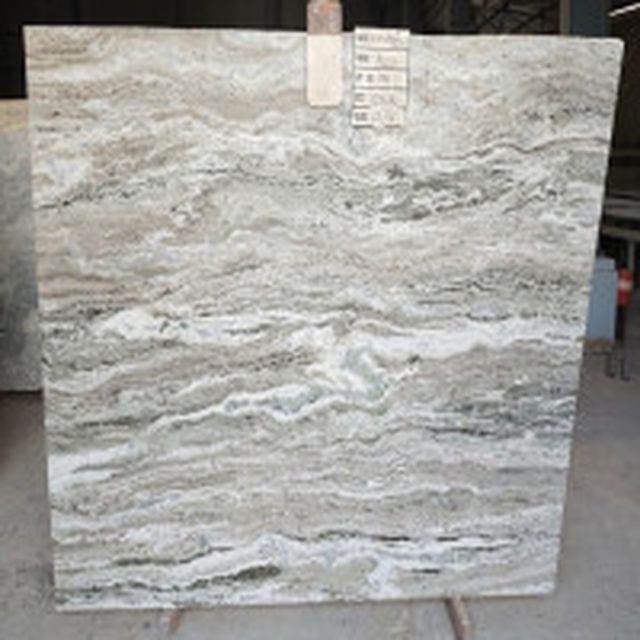
Side by side, the difference is easy to see. Real slab photographs — granite on the left three, quartz on the right three:


Cost
Pricing varies depending on the specific stone, slab thickness and the complexity of your kitchen layout. We don’t quote in advance because no two kitchens are the same. What we can tell you is what shifts the number.
- The stone itself. Common quartzes are typically the most accessible. Headline-brand veined quartzes (Silestone Calacatta-look, Caesarstone Calacatta Nuvo) sit higher. Standard granites are competitively priced; rare or exotic granites with heavy veining cost more.
- Total run length. A galley kitchen costs less than a multi-piece L-shape with an island.
- Cutouts. Each cutout (sink, hob, sockets) takes time. Undermount sinks are more involved than overmount.
- Edge profile. Square or pencil-round edges are standard. Mitred, ogee, bullnose cost more.
- Access. First-floor flat with narrow stairs costs more than a ground-floor delivery.
We always give you an itemised written quote based on your exact measurements. Quotes are free, no obligation.
Decision matrix — which one for which kitchen
| Your priority | Go granite | Go quartz |
|---|---|---|
| Lowest maintenance | ✓ | |
| Maximum heat resistance | ✓ | |
| Each slab one-of-a-kind | ✓ | |
| Consistent colour across long runs | ✓ | |
| Marble look without marble maintenance | ✓ (Calacatta-look quartz) | |
| Outdoor-capable | ✓ | |
| Widest colour range | ✓ | |
| Adds resale appeal | ✓ | ✓ (both) |
| Hides scratches well | ✓ (natural pattern) | depends on colour |
| Family with young kids | depends | ✓ |
| Heavy professional cooking | ✓ | with trivets |
If most of your priority ticks land in one column, that’s your answer.
So which should you choose?
Go granite if: you love natural stone with unique character, you want maximum heat resistance, you don’t mind a quick annual reseal, or you’re after something genuinely one-of-a-kind for your kitchen.
Go quartz if: low maintenance is your priority, you want a specific colour or pattern, you prefer a more uniform look, or your kitchen sees heavy daily use and you want zero-fuss cleaning.
Still not sure? That’s what we’re here for. Book a free consultation and we’ll bring samples of both to your home so you can see and feel them in your actual kitchen — against your cabinets, your flooring, your light. No hard sell, just honest advice from people who work with these stones every day.
Common questions
Is granite or quartz better? Different jobs, different answers. There’s no universal “better” — there’s “better for your kitchen”. The decision matrix above is the fastest route to clarity.
Which is more expensive? Depends on the stone. Standard granite and standard quartz are roughly comparable. Headline-brand quartzes (Silestone, Caesarstone) and rare exotic granites both sit at the top end. We’ll quote both for your kitchen if you want to compare like-for-like.
Which lasts longer? Both last decades when fitted properly and cared for. Granite is theoretically forever (it’s literal rock); quartz lasts as long as the resin binders stay intact (typically multiple decades in domestic use).
Which is more eco-friendly? Granite has a higher carbon cost from quarrying and transport. Quartz has a higher carbon cost from manufacture. Both are arguably better than worktops that need replacing every five to ten years (laminate, certain wood). The most eco-friendly option is whichever lasts longest in your kitchen.
Can I have both — different stones in different parts of the kitchen? Yes, and we do this regularly. A granite island as a feature with quartz around the perimeter, for instance. Or marble splashbacks behind the hob with quartz worktops. We’ll help you plan the visual.
Which scratches more easily? Both are hard. Both will resist normal kitchen use. Quartz can chip slightly more easily at thin edges; granite can chip at thin overhangs around sink cutouts. Conservative design at template stage prevents either issue.
Which stains more easily? Sealed granite resists most stains very well. Quartz is non-porous so essentially stain-proof. Both are practical with normal use.
Can either go outside? Granite, yes. Quartz, no — UV breaks down the resin binders over time. For an outdoor kitchen, granite is the safer choice.
What about marble? Marble is the third option, suited to clients who prioritise visual luxury and don’t mind more careful maintenance. See Marble Worktops.
Can I see samples in my own kitchen? Yes. We come to you, free, with samples of both materials. Holding them against your cabinets in your own light makes the decision much easier than scrolling images online.
Do you fit both in London? Yes. We’re based in Thame, Oxfordshire and cover central and outer London regularly. Same team for both materials.
Why IP Stone
We’re a family-run team based in Thame, Oxfordshire, with 16 years of experience fitting quartz and granite worktops across London, the Home Counties and the wider South East. We template, manufacture and fit everything in-house — no subcontractors, no middlemen.
With our 5-day fast-track option, you can have your new worktops fitted just five days after we come to measure. Useful when a kitchen renovation is on a tight schedule.
Get in touch
Free, no-obligation quote. Call us, email, or fill in the contact form. We’ll get back to you within 24 hours.
[Contact form to be inserted here by owner]
Paula (office): 01844 698 821 Direct mobile: 07492 363 932 Email: info@ipstone.co.uk
Find out more
- Granite Worktops
- Quartz Worktops
- Marble Worktops
- Quartz Overlay Worktops
- Kitchen Worktop Replacement